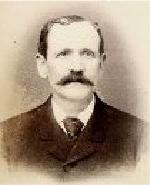
African American Jesse and Belle Walker and their family contributed greatly to the history of Deadwood. They had nine children (5 boys, 4 girls) born from 1880 through 1896. All the children could have attended Deadwood Schools at one time or another. Research shows at least four of the Walker family graduated from Deadwood High School.
The following Jesse and Belle Walker Family story is reprinted with permission from Lilah Morton Pengra’s book CORPORALS, COOKS AND COWBOYS: African Americans in the Black Hills and surrounding areas. The book title was chosen in recognition of three occupations and and what they stood for in Black history: CORPORALS - for the limitations imposed by prejudice and racism; COOKS - for the positive choices made because of personal values; and COWBOYS - for the people written out of history. Lilah's book will soon be out of print but is still available for purchase at www.LuneHousePublishing.com
.
In Part III of her book, Pengra wrote that “Jesse Walker was born in Alabama between 1842 and 1845.” According to Irma Klock in her book Yesterday’s Gold Camps and Mines in the Northern Black Hills, Walker was given as a wedding present to the master's son. The master continued to enslave Jesse's mother. Jesse would sneak away to visit her. He received floggings for this behavior but Klock wrote, "He didn't cry". His master observed, “Some day, Boy, you'll make a good soldier.”
Pengra continued the story: “ Walker served in the 22nd U.S. Colored Infantry, with service in Virginia , Washington , D.C. and Texas during the Civil War. After the war, he worked his way through Indian Territory . By 1870, he lived in Omaha , Nebraska and worked as a barber. . . In 1876 Jesse headed west for the gold rush in the Black Hills .”
The March 21, 1879 issue of the Black Hills Daily Times noted that Rev. Daniel Ames married Jesse Walker and Belle Bruce, the daughter of Charles and Keziah Brown. The Bruces lived in Central City where Brown operated a "boss dance house" (Black Hills Champion, August 13, 1877, p. 1). After the wedding, the Walkers joined the Browns in Central City where Mr. Walker operated a barbershop.
It was announced in the October 18, 1884 Black Hills Daily Times that "Charley Brown and Jesse Walker have transformed the building formerly occupied by the Adams Bros., and will open a saloon and club room."
According to Pengra, “ Walker continued to operate his barbershop during the day. He nearly lost it in March 1885 when the building next door burned down. His shop suffered water damage but was saved. He, along with a number of other businessmen with buildings that were saved, made cash donations to the fire department and published a thank you ad in the Black Hills Daily Times.. A few months later, Walker again was mentioned in the Times (June 2, 1885) because he rescued the infant son of the W.E. Lowe family from a fall down a flight of stairs. The child had crawled away from home and had not yet been missed. Mr. Walker was mentioned in the July 24, 1885 Black Hills Daily Times. He was included in a list of businesses mourning the death of General Ulysses S. Grant, along with other leading businesses such as Star & Bullock, Ayres & Wardman, Overland Hotel, Pioneer Newspaper and the Keystone Restaurant.”
The Black Hills Daily Times, February 17, 1886, reported that Mr. and Mrs. Walker's twelve-day old daughter died and was buried at Mt. Moriah Cemetery . Ten months later, the Black Hills Daily Times described another tragedy visited on the Walker family:
Jesse Walker's residence, three miles from Crook City, was burned to the ground Wednesday morning, and its contents, including provisions and clothing, entirely destroyed. Jesse came to Deadwood early in the day. About 10 o'clock Mrs. Walker sent her little son to the front room to replenish the fire, and a few minutes later the flames burst through the doorway and passed like a flash throughout the building, expelling the inmates and preventing the saving of any property whatsoever. Mr. Walker was not aware of the calamity until last evening when his family arrived in town. His loss is estimated at $1,000; no insurance. Much sympathy is felt for the unfortunate family so well known in this city, and esteemed for their industry and good qualities generally. Mr. Walker sold out his Main street restaurant a few weeks ago, and had nicely located in his new home.
The Walker story was continued by Pengra: “More trouble visited again when his father-in-law Charles Brown and his 17-year-old son Ralph Walker were arrested for the murder of a Chinese woman, Mrs. Emma Frances Stone. Brown and his grandson had been drinking and playing poker at Ben Simpson's clubroom the evening of May 14, 1897 but Brown had lost all his money by midnight. He had previously been employed by Mrs. Stone and knew the layout of her household. Apparently, she woke up while he was trying to open the trunk where she kept her valuables.. He struck her across the face with one blow of a meat cleaver, then returned to Simpson's and continued playing cards until 5 a.m. when he and his grandson returned to Whitewood by horse and wagon. Police pieced together the story and arrested Brown and his grandson. News of the murder had spread so quickly that there was a lynch mob gathered by the time they returned to Deadwood. Somewhere along the trail, police separated the two prisoners. Only Brown was brought into town that day and jailed, although Ralph was indicted later. Brown's trial took place at 10 a.m. on June 10. The jury took 20 minutes to decide on a guilty verdict. Charles Brown was hanged in public on July 14, 1897 in Deadwood.” For more details of the trial, click on The Deadwood Magazine Archive of Swift Justice .
The conclusion of the story of the Walker family in Deadwood, according to Pengra, was that after the hanging of Charles Brown, “the family stayed in Deadwood and tried to reestablish their business. At least four of their children graduated from Deadwood High School . Ray Walker played on the football team in 1902, the team that won every game that season. After high school graduation in 1904, Ray married and had two children, Dorothea in 1906 and Raymond in 1911. Jesse Walker died March 27, 1908 and was buried at Mt. Moriah Cemetery in Deadwood. Eva Walker graduated in 1908. In the 1910 census Belle Walker and three of her children were living in Deadwood. She was 48 years old, widowed and working as a janitor. Her son Edwin worked as a bartender. . . By 1920 Edwin had moved to Seattle and Ray had died. Mrs. Walker, her daughters Eva and Lady and Ray's two children moved to Minneapolis , Minnesota .”
My favorite comment by Pengra in the her whole account of the Walker family is underlined here for emphasis and for you to think about the strife and triumphs of life. Pengra wrote that “Belle Walker was probably one of the unsung heroines of the Deadwood community. Even though her father had been hanged for murder, her oldest son indicted as an accessory, her home burned to the ground and her husband dead, she still managed to support her children through high school graduation.”
 ~~Click on picture sets for larger view~~
PICTURE SET ABOVE
Left: 1899 Deadwood High School Football Champions
with unidentified Walker son, second row right
Right: 1902 Undefeated Deadwood High School Football
team with Ray Walker, second row right
PICTURE SET BELOW
Left: 1908 Deadwood High School Graduation Class
with Eva Walker, second row secpmd from right
Right: 1908 Deadwood High School Football
team with Edwin Walker, back row right


 This classic Blast from the Past report comes from Woody (Walter Jr.) Williamson DHS56. The wreck viewed after 50+ years kinda seems funny but the effects at the time were very serious.


 ~~Click on picture sets for larger view~~